
Roundtable Report · UKREiiF 2026


Developer intent is back at scale. Applications are at a decade high. So why are sites stalling - and what needs to change?
Planning Portal hosted a closed roundtable at UKREiiF 2026 bringing together twenty senior leaders from across government, local authorities, major developers, institutional investors, and industry bodies.
As the national planning application service, Planning Portal processes around 95% of planning applications in England. That gives us a uniquely granular view of market intent - and what we saw in 2025 was remarkable. In every region outside London, 2025 recorded the highest number of new homes applied for this decade, and by very significant margins. It’s fair to assume that recent NPPF reforms drove this increase, resulting in more applications for new homes last year than in the three previous three years combined.
"Developer intent is clearly there. So, what does it actually take to turn an application into a built home?"

Framing question posed to the room
The data we shared painted a clear picture of renewed momentum. Self and custom-build homes were up 30%. Large-scale applications - schemes featuring hundreds, and in several cases thousands, of housing units increased sharply. Policy refreshes have sparked renewed momentum. Grey belt, wider NPPF reforms and the renewed political focus on housing delivery are having a measurable impact on market behaviour, encouraging sites to come forward at greater pace and scale.
Despite these promising figures, we needed to be clear on what our data cannot prove – progress on delivery. Further down the pipeline, from starts through to completions, sites are continuing to stall or fall away. The question we posed to the room reflected on whether, as things stand, this surge of intent will convert into homes - or whether application progress will get lost in the same structural friction that has held back delivery for years.

The Challenges
The maths is the pinch point
A hugely striking statistic from the session: the average cost of building a home has increased by £80,000 since 2019. Combined with 50% of affordable units being delivered through Section 106, and a first-time buyer market under severe pressure, it isn’t difficult to see why viability has become a defining challenge of this moment.
As one attendee put it plainly: "The pinch point is not planning - the maths is the pinch point." Rising build costs, softening sales values, construction cost inflation, interest rates and the cumulative tax burden are converging to create a viability gap that is squeezing developer margins across the board - particularly for flatted developments, high-density suburban schemes and anything with significant affordable housing requirements.
London and, more recently, Manchester face particularly acute pressures, where materials costs, density requirements and building costs create a unique set of challenges - even as the sector begins to see greater clarity and improved pace through the Building Safety Regulator approval process. Development simply isn't stacking up on too many sites, and until the economics improve, planning applications will continue to outnumber starts.
The core delivery challenges our participants outlined were:
- Huge increase in build costs – up by £80,000 since 2019
- Significant affordability and density gap in London & Manchester
- Interest rates & construction cost inflation
- Building Safety regulator complexity
- Development not stacking up on land values
- Unpredictability of permits leading to delay-related costs
- Sales demand collapsing for private new builds
- Build-to-rent service charge pressures
- Suburban density resistance
These are of course conflated and compounded by wider issues facing the industry, such as:
- Ecology timing
- Nutrient neutrality requirements
- Statutory consultee delays
- Lack of local coordination & plan-making
- Government-wide infrastructure & water issues
- Competing planning objectives
- S106 obligations not reflecting current viability
The planning system was also underlined as a continued point of friction, even where reform is underway.
One attendee reported being stopped on hundreds of sites due to ecology timing alone. Nutrient neutrality, competing planning objectives and the unpredictability of the appeals process all contribute to what one participant described as a system that has become dehumanised - focused on process rather than people and placemaking. Statutory consultees were also identified by government representatives as one of the top three blockers, alongside lack of local coordination and infrastructure issues.
There was broad agreement that where political will exists and applications are being submitted at record levels, coordination failures downstream are still absorbing these gains.
The demand side is equally fragile. The market has seen a significant collapse in new build purchase demand for private homes, with a clear need for help-to-buy style support to stimulate sales. Without first-time buyers in the market, viability becomes even harder to achieve. Shared ownership mortgage reform and staircasing in social housing were highlighted as practical near-term levers - but temporary subsidy alone won't solve a structural problem.
The clearest message from institutional investors was that time is money, and the unpredictability of the permissions process is making sustained investment harder to justify. Stability - in policy, in regulation, in return profiles - is what capital needs to commit at scale. Certainty today is worth more than promises tomorrow.

The Solutions
Momentum is building - and the tools exist
The session was not without genuine optimism. A concrete anchor came from government: the MHCLG Homes Accelerator programme has already permissioned 134,000 homes to date - proof that targeted intervention works when it is coordinated and sustained. The Brownfield Release Fund is averaging a two-year unlocking timeline, and plans for local asset development are beginning to create the multi-partner framework the sector needs.
- 01 NPPF Reform - More to Come This Summer
Grey belt policy has already transformed long-term prospects into short-term viable opportunities. Further reform of the NPPF is expected following imminent consultation, building on announcements made over the past six months. These changes point towards a more rules-based, “default yes” approach for well-connected sites, alongside simplified biodiversity requirements and the introduction of a new medium-site category. Collectively, these reforms are designed to accelerate housing delivery, reduce planning friction, and increase certainty for developers and land promoters.
- 02 New SME-Focused Initiative on Small Brownfield Sites
A new initiative working with Local Authorities and MMC on small brownfield sites signals a deliberate shift to diversify the housebuilder base. Homes England will release more land exclusively to SMEs, backed by up to £100 million in SME accelerator loans. SME housebuilders have fallen from 40% of new homes in the 1980s to just ~10% today - rebuilding this pipeline is one of the most urgent structural priorities.
- 03 S106 Reform - Unlocking Obligations Where Viability Has Shifted
Unlocking Section 106 obligations more flexibly across the UK was highlighted as a significant lever, particularly where viability has demonstrably shifted since permissions were originally granted. Government guidance is already moving in this direction, urging a pragmatic, evidence-led approach to modifying planning obligations.

- 04 Technology & Skills - Right Tools in the Right Places
The room made a clear case for protecting the funding and skills the built environment needs, and deploying technology purposefully. The opportunity is not to replace professional judgement - it's to remove the friction that stops skilled peopl e doing their best work.
A portal for sites to come forward and help coordination at a local level was also proposed in the room as a practical near-term step.
- 05 Design Together Earlier - Reducing Regulatory Delays
Two big structural solutions emerged: designing together earlier by linking up strategic environmental assessments at the local planning level, and addressing the fragmented regulatory system through a shared view of risk. The current system creates regulatory drag precisely because agencies work sequentially. Earlier coordination - across ecology, water, infrastructure and planning - would unlock significant capacity.
- 06 Long-Term Public-Private Partnerships
Long-term partnerships and relationships are not a nice-to-have - they are the mechanism through which delivery actually happens. The Sheffield Together programme was cited as a model of what strong regional alignment can achieve. Strategic, long-term relationships - particularly around MMC and brownfield - were emphasised as essential to building the confidence that makes investment decisions viable.
- 07 Demand-Side Support & Front-Loading Viability
Help-to-buy style schemes, better consumer marketing for new homes, and government subsidy where viability genuinely doesn't stack up all have a role in stimulating the sales market. But the most important behavioural shift is front-loading viability assessments - stress-testing schemes against current build costs and sales values before significant resource is committed, rather than discovering problems at the point of delivery.
- 08 Clear Planning Direction & Stability Above All
The clearest ask from investors and developers alike was not for radical new policy, but for clarity, consistency and long-term direction. Stability in planning, regulation and return profiles is the single biggest unlock for sustained investment.
.png)
Closing Thoughts
The data shows the moment is now
Applications at a decade high. Grey belt opening up new land. Planning reform underway. And a room full of people from across the public and private sectors who genuinely want to progress delivery.
Now the challenge - for all of us - is to ensure this surge of intent isn't wasted or stalled, but seized. The maths needs to work. The system needs to coordinate. And we need to talk more about the people at the end of all of this: the families waiting for the homes we are here to deliver.
"Planning reforms are undoubtedly stimulating this surge of new applications. There is now an opportunity to better support delivery further along the chain."
Planning Portal
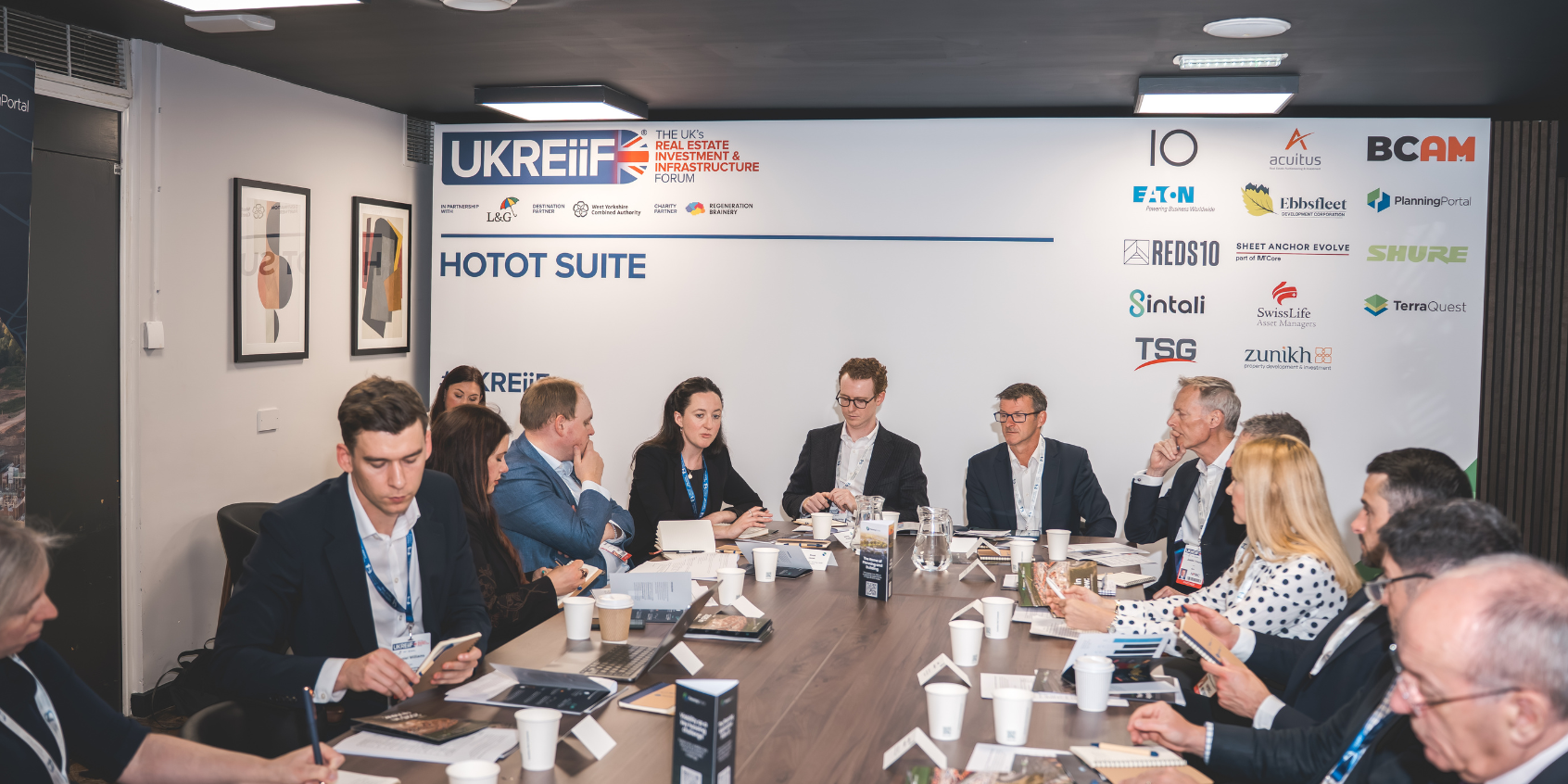
Roundtable Attendees
Alex Cobb Head of Housing and Strategic Planning , West of England Combined Authority
Angela Harrowing Deputy Director, Property Programmes, Office of Government Property, Cabinet Office
Dan Williams (chair) CRO Chief Revenue Officer, Planning Portal & TerraQuest
David Lewis Executive Group Director, Property and Investment, L&Q
Erin Bryant Regional Development Director, Wates Residential London, Wates Group
Aisling Wootten Deputy Director, New Towns , Ministry of Housing, Communities and Local Government
Sir James Cleverly Shadow Secretary of State for Housing, Communities and Local Government , House of Commons
Jack Johnson Head of Land, Planning Portal & TerraQuest
Jonathan Richards Managing Director, Stonebond Properties
Jules Pipe CBE Deputy Mayor for Planning, Regeneration and the Fire Service , Greater London Authority
Justin Young Chief Executive Officer, RICS
Leah Mitchell Senior Policy Adviser, No. 10
Mark Skilbeck UK Planning Director, Taylor Wimpey
Mike Burke Sustainable Development Director, Natural England
Neil Jefferson Chief Executive, Home Builders Federation
Read Leask Senior Policy Manager (Housing & Built Environment), L&G
Rebecca Phillips Chief Planning Inspector, Planning Inspectorate
Robert Huckstep Director, BlackRock
Ruth Davison Director of Environment and Place, West Yorkshire Combined Authority
Sara Le Conte- Curtis Global Head of Marketing, Planning Portal & TerraQuest
Uta Bolt Data Scientist, No. 10


