
The 6 pillars of construction readiness for first-time self-builders

The 6 Pillars of Construction Readiness for First-Time Self-Builders
For many first-time self-builders, receiving planning permission feels like the biggest hurdle. But after decades working across more than £1 billion worth of construction projects, we’ve seen the same pattern repeat itself time and time again.
The projects that struggle most are rarely the ones with the worst designs or the tightest budgets. They are the projects where readiness was over looked.
In today’s construction industry, enormous attention is placed on planning approval, architectural visuals, and aspirational design inspiration. Yet far less attention is given to the practical and emotional readiness required to actually deliver a successful project.
And that gap is where many self-build journeys begin to unravel.
From financing uncertainty and unrealistic timelines to poor alignment between design ambition and construction cost, the majority of project challenges emerge long before anyone steps onto site.
The reality is simple. Most construction problems happen before construction starts. That is why we believe the industry needs to shift the conversation away from planning permission alone and towards something far more important: construction readiness.
Why construction readiness matters
Self-build projects are often emotionally driven.
People are building a family home, creating long-term security, or pursuing a lifelong ambition. But emotional investment can sometimes mask operational risk.
In our experience, many first-time self-builders begin their journey without clarity around:
- Realistic construction costs
- Funding structure and contingency
- Project sequencing
- Procurement strategy
- Delivery timelines
- Insurance and risk protection
- The relationship between design decisions and budget impact
This is not because people are unprepared or careless. It is because the process itself is fragmented.
A self-builder may speak to a planner, architect, mortgage advisor, contractor, and supplier, all independently, without anyone helping them assess whether the overall project is genuinely ready to move forward.
The result is often:
- Escalating costs
- Redesign work
- Programme delays
- Contractor disputes
- Financing pressure
- Emotional stress and decision fatigue
Construction readiness is about reducing those risks before they become expensive problems.
The Six Pillars of Construction Readiness
To help first-time self-builders better understand where they stand in their journey, we developed a Construction Readiness Quiz built around six core pillars that consistently determine project success.

1. Understanding and managing your finance
One of the most common issues in self-build is beginning a project without full financial clarity.
Construction budgets are not just about build cost per square metre. They involve professional fees, planning costs, utilities, abnormal ground conditions, finance costs, contingencies, inflation risk, and procurement strategy. Many projects become vulnerable because the budget was based on aspiration rather than delivery reality. Financial readiness means understanding not only what you can afford to build, but how design decisions, specification choices, and procurement routes directly influence cost certainty.
2. Confidence in finding land and location
Land selection is one of the most underestimated decisions in the self-build process.
A site may appear attractive visually while hiding significant challenges related to access, topography, drainage, utilities, ecology, planning constraints, or ground conditions.
The right plot is not simply about finding land with permission. It is about finding land that aligns with your budget, build method, timeline, and long-term lifestyle goals. Confidence in this stage reduces risk later in the project lifecycle.
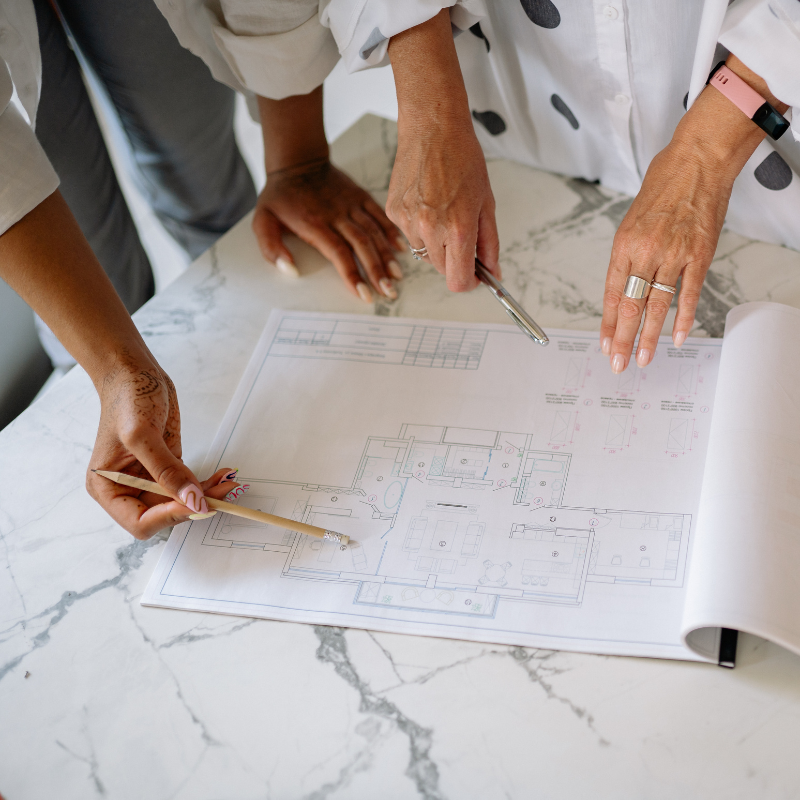
3. Your vision and building design
Design should never exist in isolation from cost and buildability.
One of the biggest disconnects in the industry is the gap between architectural vision and construction reality. A beautifully designed home still needs to be commercially deliverable. The most successful projects are not necessarily the most complex. They are the projects where design intent, budget, procurement strategy, and construction methodology are aligned from the beginning. Good design is not just about appearance. It is about performance, practicality, sequencing, and long-term value.
4. Delivering your project on time
Time overruns create pressure across every part of a project.
Delays increase financing costs, create contractor coordination issues, and place emotional strain on homeowners. Many first-time builders underestimate how much project success depends on early-stage planning, decision-making speed, procurement timing, and supply chain coordination. Construction readiness means understanding that programme certainty starts long before construction begins.
5. Protecting your investment
Building a home is often the single largest financial investment a person will ever make.
Yet risk protection is frequently treated as an afterthought. Insurance, warranties, contractual clarity, compliance, and contingency planning all play a critical role in safeguarding both the project and the people behind it. The strongest projects are not the ones without problems. They are the ones prepared to manage them.
6. Mental readiness and social support
This is perhaps the most overlooked pillar in the entire self-build journey.
Construction projects are emotionally demanding. Decision fatigue, budget pressure, delays, uncertainty, and conflicting advice can quickly become overwhelming particularly for first-time builders balancing careers, family life, and financial responsibility. Mental readiness is not about eliminating stress. It is about entering the process with realistic expectations, the right support network, and confidence in your decision-making framework. Projects succeed more often when people feel informed, supported, and in control
A Better Starting Point for Self-Builders
The self-build industry does not need more confusion. It needs better guidance earlier in the process. Planning permission may open the door to a project, but readiness determines whether that project succeeds.
That is why we created the Construction Readiness Quiz, to help first-time self-builders better understand their strengths, identify potential risks early, and move forward with greater confidence.
Because successful construction projects are not defined by how they start on site. They are defined by how well they were prepared before construction ever began.
Take the Construction Readiness Quiz
Discover how prepared you are across the sixpillars of construction readiness and identify the areas that could impact yourself-build journey before work begins.


